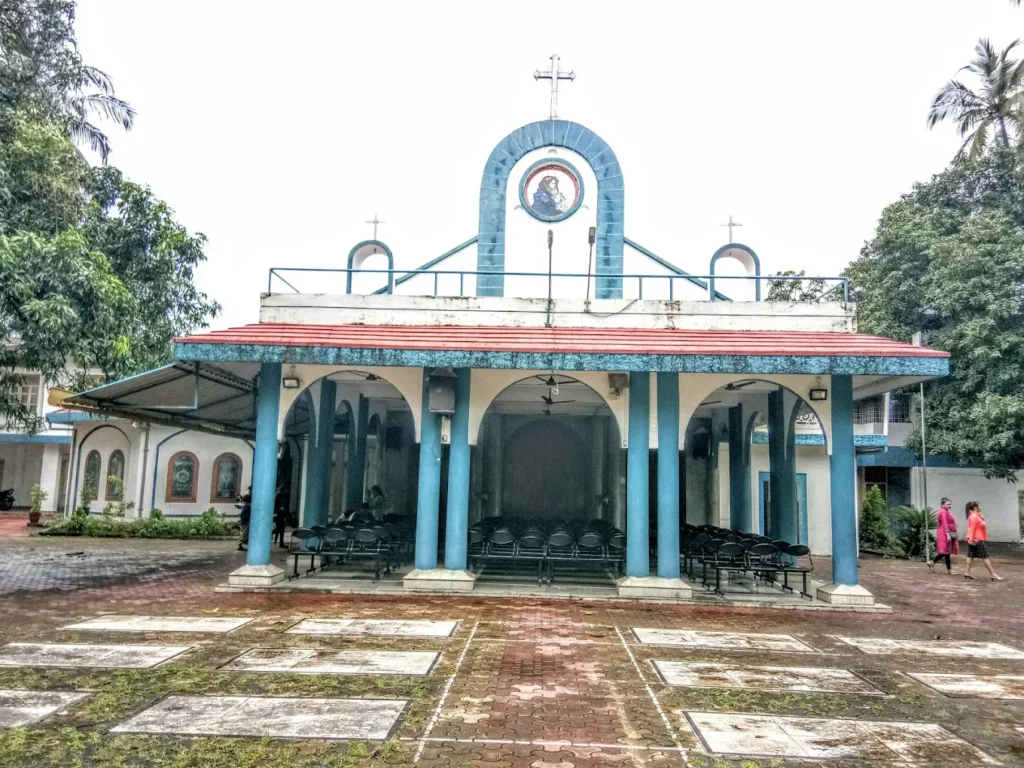
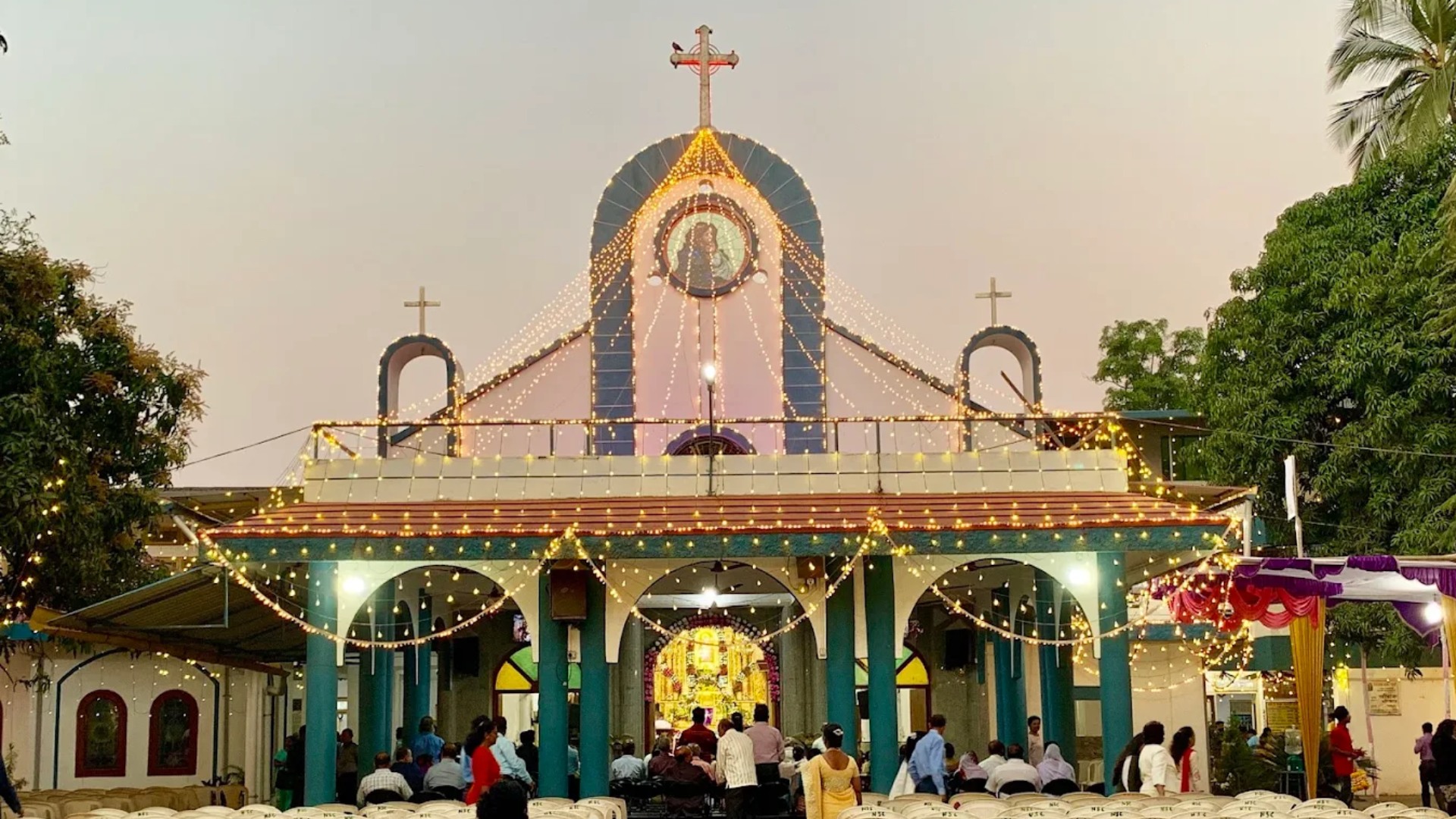
The origins of the Mother of God Church in Palle trace back to the late 16th century, making it one of the earliest Christian establishments outside the historic Vasai Fort. While the exact year of its foundation remains uncertain, historical references suggest that the church was established sometime between 1585 and 1595. Early records by missionaries and chroniclers of the time indicate its significance as a prominent place of worship in the region.
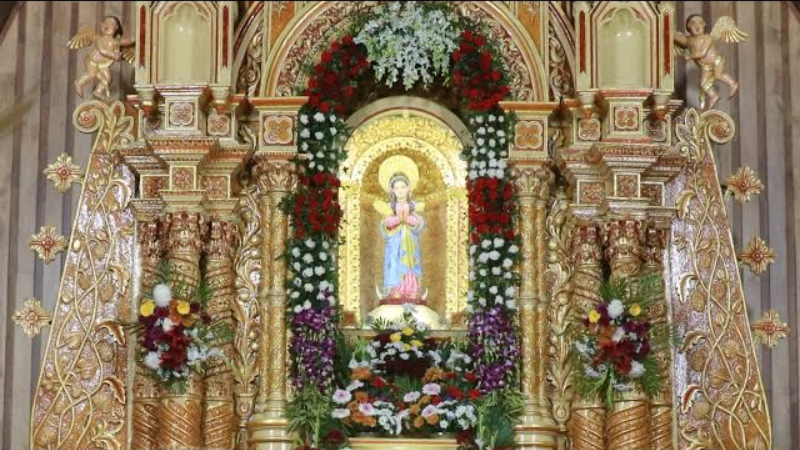
Situated at the southern end of Bassein (present-day Vasai), the church stood facing the island of Panju. It was known not only for its location but also for its deep spiritual importance among the faithful. Central to its devotion was a revered statue of Our Lady, described in early writings as a figure of great beauty that inspired strong devotion among the local community.
Over time, stories and traditions surrounding the church further strengthened its place in the spiritual life of the people. The 18th century brought a period of hardship. With declining external support and growing challenges, the church and its associated institutions faced financial strain. This difficult phase was compounded during the Maratha invasion of 1739, during which the original structure and associated buildings suffered destruction, marking a significant setback in its history.
Despite these challenges, the spirit of the community endured. In the mid-19th century, the church was rebuilt on a nearby site, continuing its legacy of faith and service. It remained fondly known by its Portuguese name, “Mae de Deus” (Mother of God), reflecting its historical roots.